
 Marcus Garvey: A Vision for Black Economic Power
By Erika Trenell | Nativa Party Historical Series
Then came Marcus Mosiah Garvey, a Jamaican visionary who believed that freedom required economic independence, not integration.
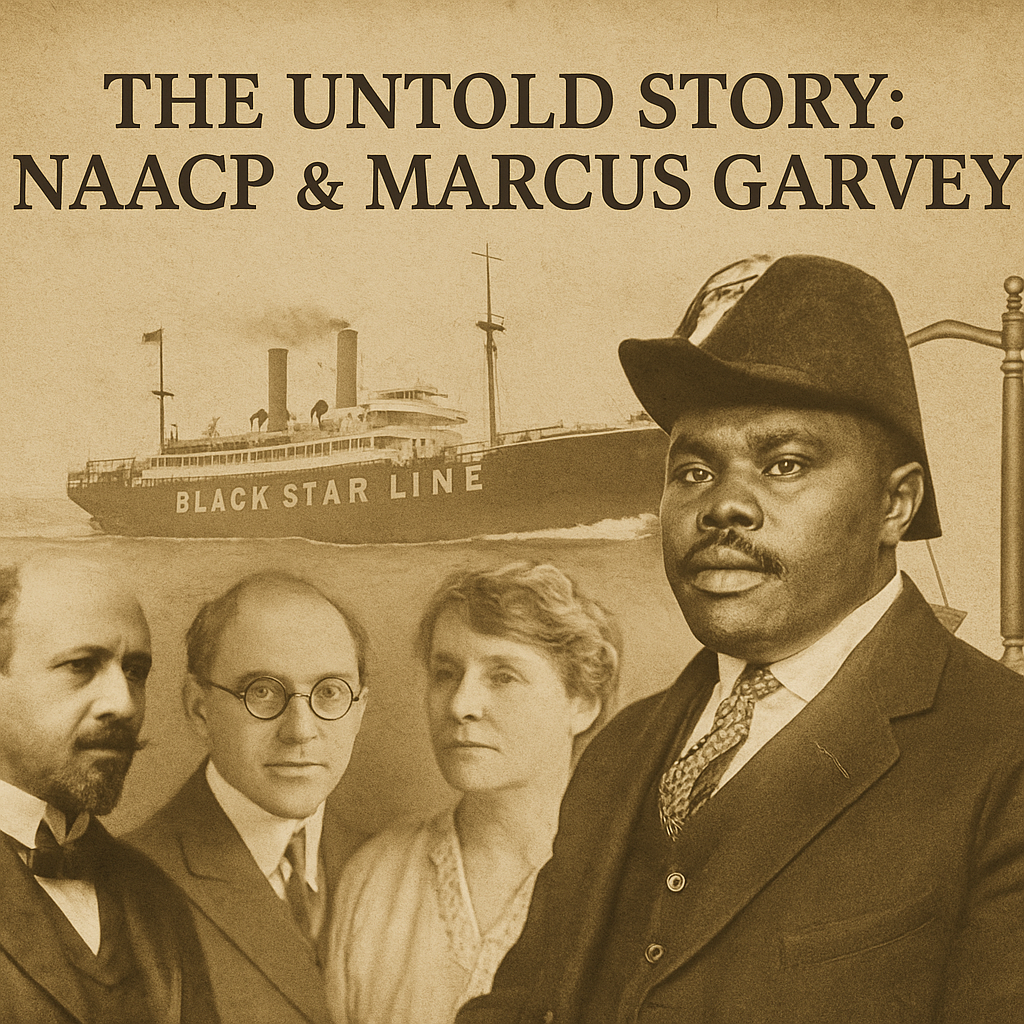
Through the Universal Negro Improvement Association (UNIA), Garvey preached self-reliance, unity, and pride. He created businesses, schools, newspapers, and the legendary Black Star Line, a Black-owned shipping company designed to link Black people across the world — from the Americas to Africa.
For the first time, ordinary Black men and women bought stock, built ships, and dreamed of international trade and self-rule.
Garvey’s slogan said it all:
“One God! One Aim! One Destiny!”
By 1920, the UNIA had millions of members worldwide — the largest global Black movement in history.
When Success Becomes a Threat
Garvey’s rise made powerful people nervous. His movement challenged both white supremacy and Black dependence on white-controlled organizations.
Inside government, J. Edgar Hoover — then head of the Justice Department’s Bureau of Investigation (the early FBI) — called Garvey a “notorious Negro agitator.” Hoover sent spies into Garvey’s movement and worked to discredit him.
Garvey’s enemies in the press accused him of fraud, while federal investigators seized on a single technicality: a mail-fraud charge tied to Black Star Line stock advertisements that used a photo of a ship the company hadn’t yet purchased.
Despite the lack of real victims, Garvey was convicted in 1923, imprisoned in Atlanta, and later deported in 1927 after President Calvin Coolidge commuted his sentence — on the condition he leave the country.
How They Railroaded Marcus Garvey
Garvey’s trial was riddled with bias:
The judge was openly hostile.
Key witnesses were government informants.
No proof of personal theft or embezzlement ever surfaced.
The message was clear: a Black man organizing millions, teaching independence, and challenging economic control was too dangerous to be left alone.
His deportation broke the UNIA’s momentum — but his ideas survived.
Garvey’s Legacy: Building Black Wealth and Pride
Before his fall, Garvey:
Created Black-owned businesses and newspapers.
Encouraged buying land and producing goods within the community.
Reawakened a sense of African identity and global unity.
Inspired future leaders — Malcolm X’s parents were Garveyites, and even the Nation of Islam built on his foundation of self-reliance.
He proved that economic power is the root of true independence.
Two Roads, One Truth
The NAACP pursued justice through courts and policy.
Garvey pursued it through ownership, enterprise, and nationhood.
One was funded by outsiders who wanted gradual change.
The other was built from the ground up by the people themselves — and it was the one the system couldn’t tolerate.
Today, both legacies live on, but Garvey’s story reminds us that self-financing, unity, and economic independence remain the keys to lasting liberation.